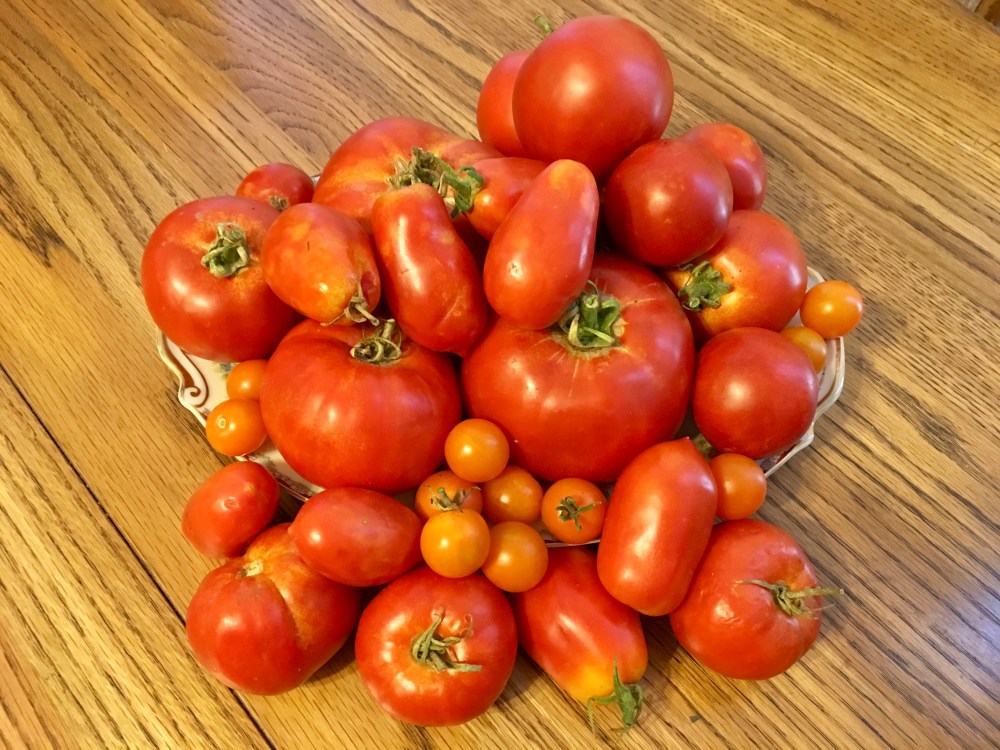
Get lost in Nature and you will find yourself! Plant an organic edible garden! Learn to cook with the fruits and veggies you grow! Have a potluck with friends and neighbors in your garden! Fresh picked, organic produce has more nutritional value, is more colorful, smells better, has a better texture, and is tastier than frozen, canned, or conventional produce. Choose organic at the grocery store, restaurant, and garden store! Care for your health, the Earth, the animals, the future! Clean food, healthy soil, sustainable rivers, no toxic chemicals effecting wildlife and pollinators!
ROASTED TOMATO SAUCE
At harvest time, you will pick so many tomatoes that you can make garden fresh organic roasted tomato sauce for pasta, stuffed peppers, eggplant parmesan, or pizza. Line a baking pan with parchment paper and add sliced tomatoes, onion, garlic, hot and mild peppers from your garden. Sprinkle with organic extra virgin olive oil and sea salt and roast in a preheated oven at 400 degrees for 20 minutes. Let cool and blend until smooth. Cut garden fresh herbs, like parsley, sage, rosemary, oregano, thyme, and basil, into the sauce and add sea salt to taste. Fill and label a glass Mason jar. It will keep in the refrigerator a week or freeze it to last for months.
HEATHLY COLE SLAW
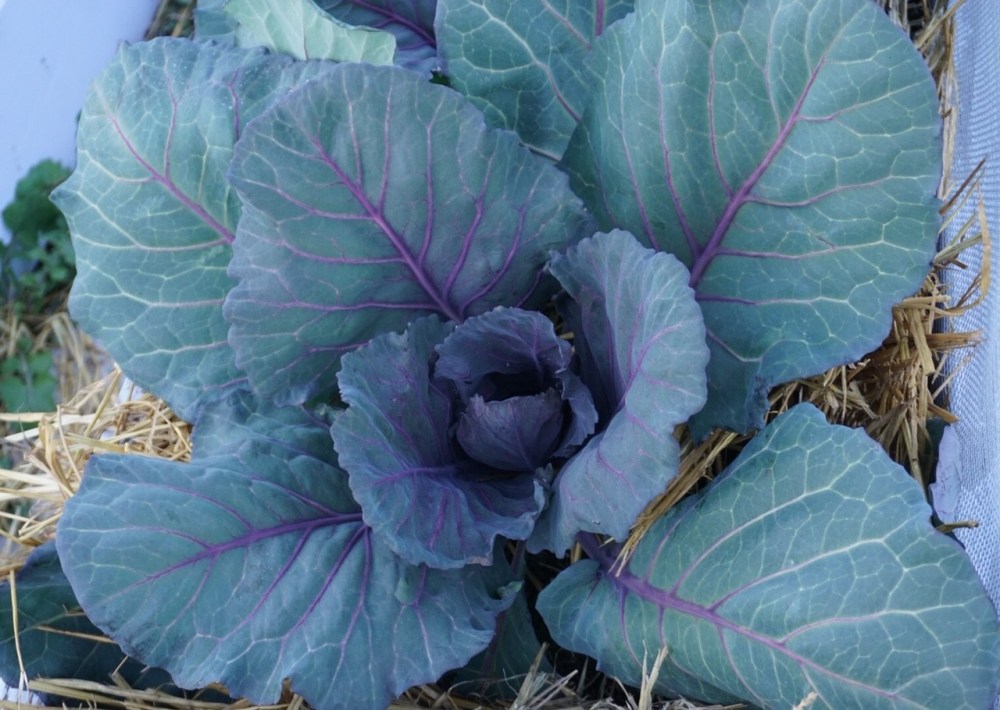
Cabbage has been known for thousands of years as a miracle food for good health. It improves digestion, detoxifies the stomach and upper colon, kills bacteria and viruses, and stimulates the immune system. Try this yummy Broom Salad fresh from your organic backyard garden as a detox, colon cleanse, and to maintain a healthy gut. Shred carrots, finely chop cabbage and red onion. Add fresh herbs, like basil, dill, marjoram, thyme, or parsley. Add finely chopped celery, sweet pepper, and/or radish. Make a dressing with lemon juice, sea salt, and organic extra virgin olive oil. Tasty and good for your digestion!
PESTO
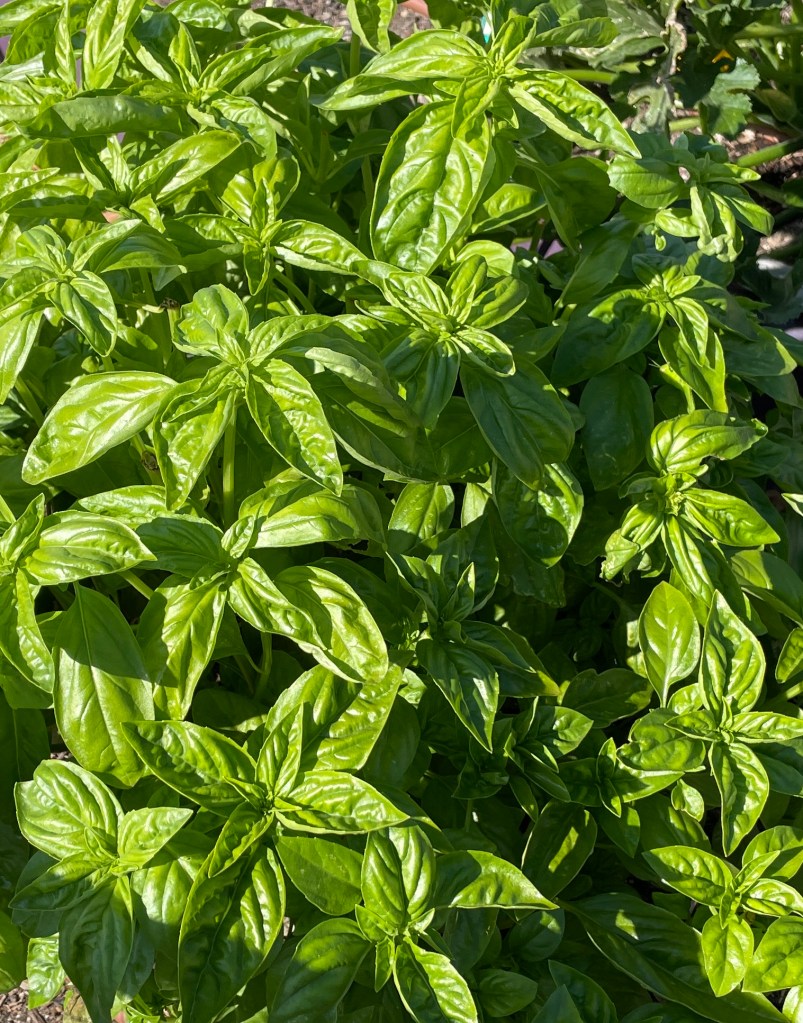
This classic Italian sauce is made with fresh basil, pine nuts, organic extra virgin olive oil, and organic garlic to add to pasta. Pesto can dress up a simple plate of pasta or add a great flavor boost to rice, sandwiches, salads, a veggie dip, or a topping for pizza or flatbread. You can use countless kinds of greens from your organic garden to make a pesto, like parsley, arugula, radish greens, kale, or Swiss chard. Some greens are more watery and will give a different texture to the sauce. Add fresh organic lemon juice or vinegar for brightness. Bitter greens can work well when balanced with the fat and acid. Parsley mixed with basil gives the pesto a vibrant green color.
Add crunch and texture to the sauce with walnuts, almonds, pumpkin seeds, croutons, pistachios, or pine nuts. Use raw or roasted nuts and try different nuts with different greens.Get creative and add other ingredients, such as tomatoes, lemon juice, chilies, or capers for a wonderful burst of freshness. Ingredients: 1 cup fresh organic basil or garden greens, 2 tablespoons organic nuts, 1 clove organic garlic, 3 tablespoons organic extra virgin olive oil, ¼ teaspoon sea salt.
Combine organic nuts, sliced garlic clove, and ¼ tsp sea salt in a blender or food processor and pulse until finely chopped. Add your choice of garden greens and the organic extra virgin olive oil and continue to pulse, scraping the sides occasionally, until the greens are coarsely chopped. If you want, add any remaining ingredients, and pulse and scrape until the mixture is finely chopped but not pureed. The sauce should hold together without being runny. Put the pesto in a small glass Mason jar. Use it fresh, refrigerate for 4 days, or freeze for a couple of months and thaw overnight in the refrigerator before using. You will love this versatile sauce, especially when you have grown the greens in your own organic garden.
FERMENTED VEGGIES
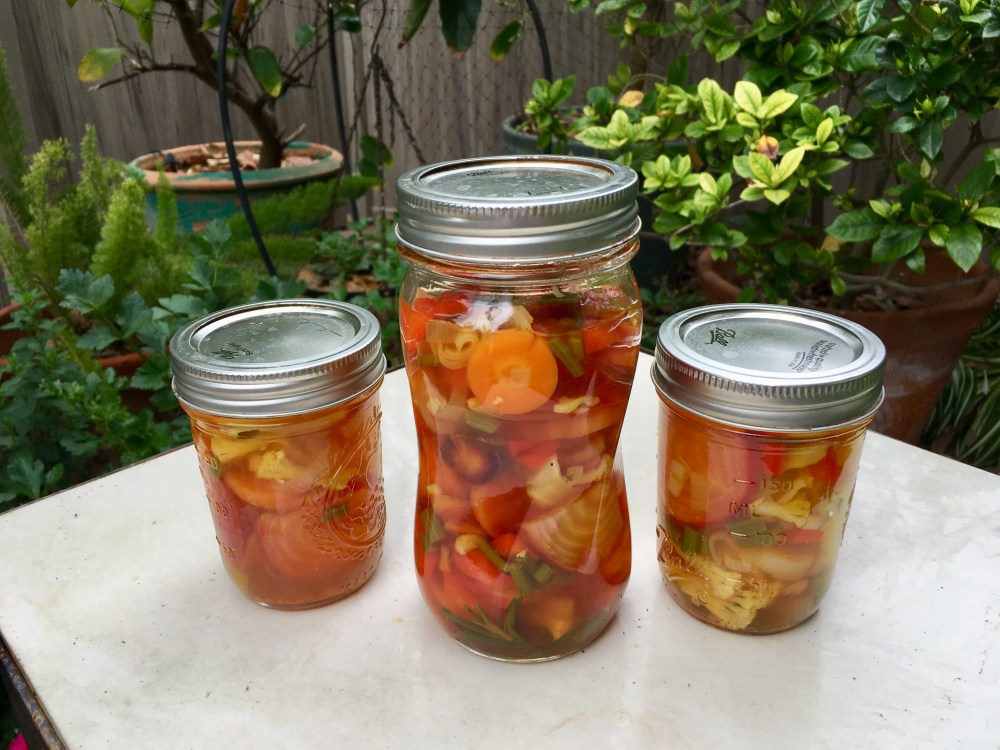
Fermenting and pickling your veggies, like sauerkraut, give the gut probiotics that boost your immune system and your general well being and protect the gut from invading pathogens and diseases. Fermented foods have a satisfying umami, savory flavor. To ferment your harvest, fill jars with organic veggies from your garden. Pictured are peppers, squash, tomatoes, carrots, and Himalayan pink salt or sea salt, spices, and pure water.
Wash and chop the veggies to be fermented. Crush a garlic clove and place it at the bottom of a pint glass Mason jar, add herbs and spices, and fill the jar with veggies leaving 1 inch at the top. Dissolve 2 tsp sea salt into ½ cup of water and pour into the jar, submerging the veggies beneath the brine. Fasten the lid loosely and allow the jar to sit on the counter for 1 – 2 weeks. Open the jar daily to release the pressure of the CO2. Taste the veggie to test the salty, sour flavor. Slow the fermentation by placing the jar in the refrigerator and eat within 2 weeks.


Hi Diana,What a great posting you put together! Everything looks so delicious! LarrySent from my iPhoneOn Sep 9, 2026,
LikeLike
Dear Diana,
as always you have provided a wealth of information and useful suggestions. Thank you for all that you do for all of us 💜. Laura Astor
LikeLike