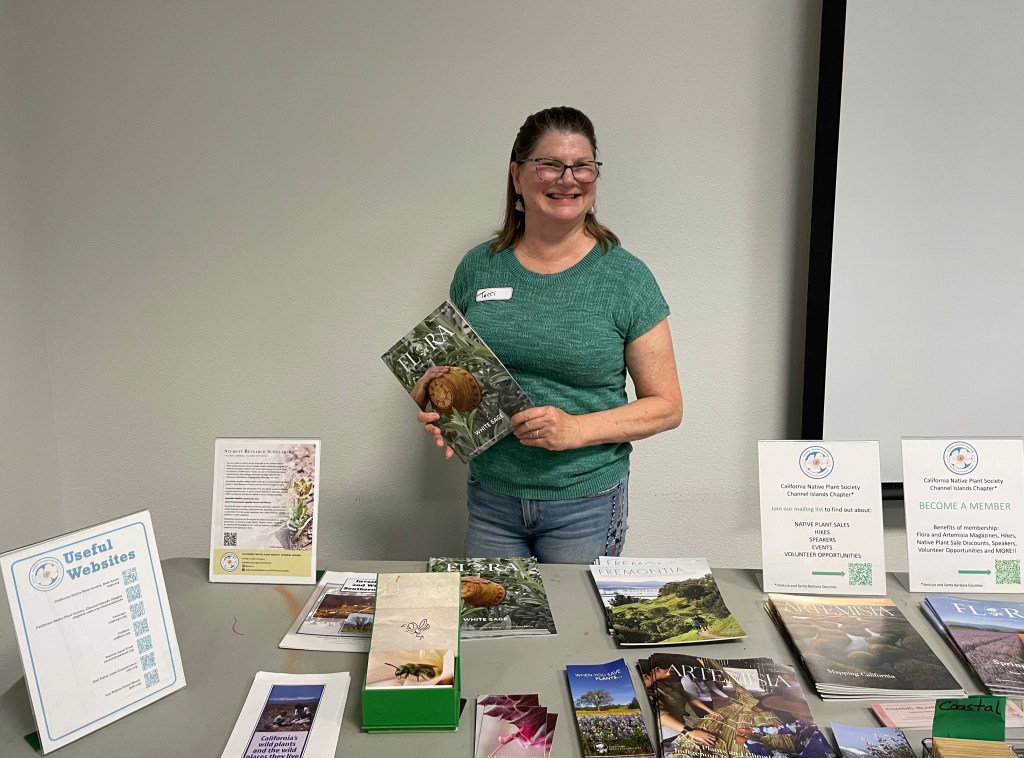
At our January meeting, Terri Burgess, Chapter Membership and Outreach Coordinator of our local California Native Plant Society, told us of the importance of protecting native plants from extinction and their role in our local ecosystem of plants, insects, and animals. California has unique native plants and some rare native plants live only on the volcanic soils in Newbury Park!
California Native Plant Society is a statewide organization and has been around since the 1960s. It’s dedicated to preserving native plants and their environments. The group leads hikes and provides mapping of native plants. California is one of 36 designated biodiversity hot spots on earth. We have 6500 native plants in California and 2400 are endemic to California (meaning they don’t grow anywhere else on earth). California also has the highest concentration of plant species at risk of extinction. When a plant goes extinct, it causes a ripple effect.
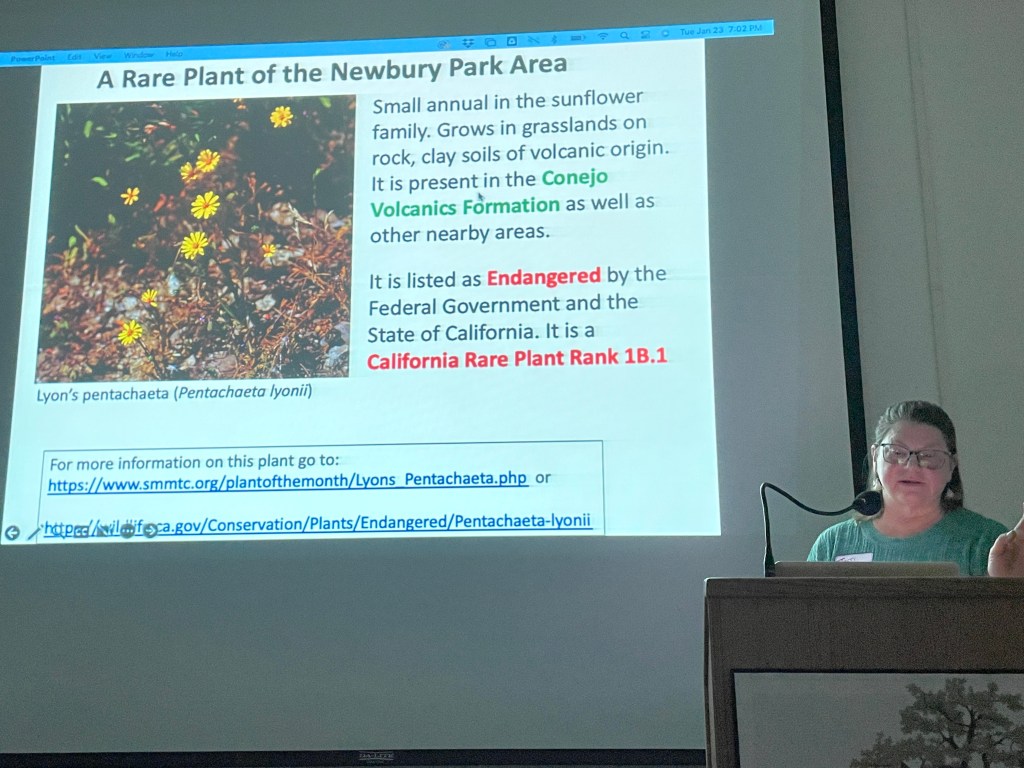
The California Native Plant Society advocates and litigates to preserve these plants. They have restoration programs. There’s a manual of California Vegetation online. It provides good information for new developments – what to avoid and what is good to use. A good website is: https://rareplants.cnps.org/
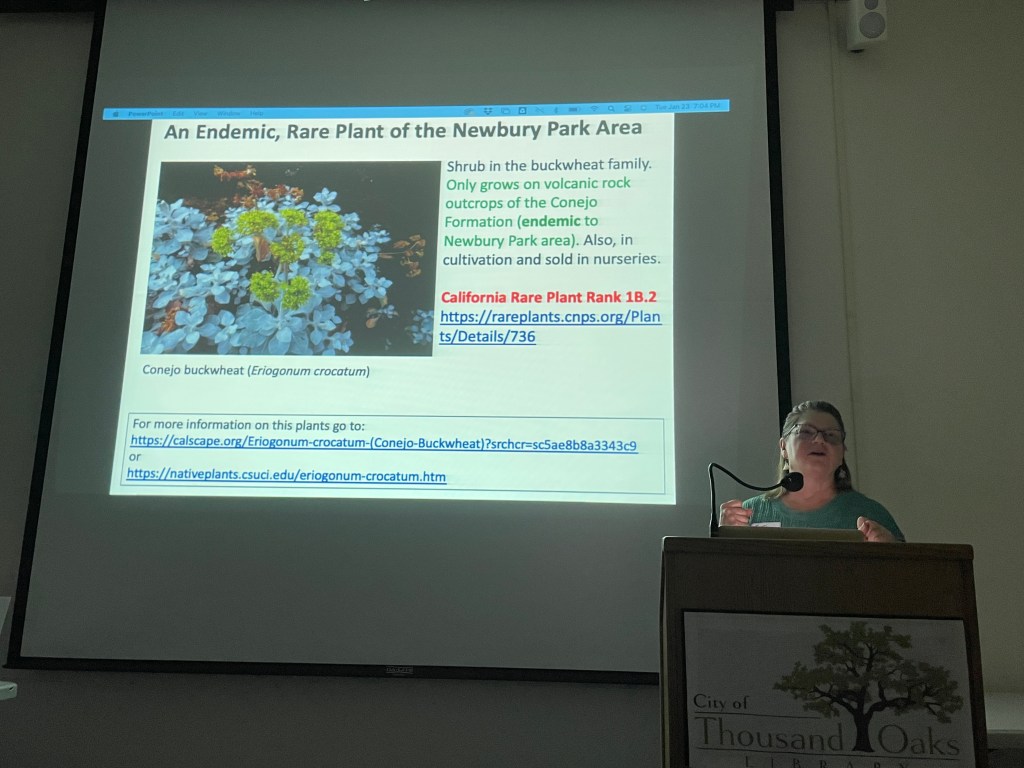
Some of the rare plants found in Newbury Park that especially like the Conejo Volcanic formations include Conejo Buckwheat and Lyon’s pentchaeta, a small annual in the sunflower family, which are endemic to the Newbury Park area and are now endangered. Another plant is Verity’s Dudleya – it only grows on the volcanic rock outcrops of the Conejo formation. It’s endemic to Newbury Park and is listed federally as a threatened plant. Many types of dudleyas are currently being poached for sale abroad.
Why garden with native plants? Native plants evolved over 10,000 – 100,000 years. They have grown to work with our local climate, soil types and animals and together make a functional ecosystem. They use less water, no fertilizers, and are easy to grow. They do the best job of providing food and shelter for native animals. Street trees bring value to your home and life, but planting native trees on the streets are better for wildlife and the environment. Local birds need the bugs and caterpillars that native trees and plants can provide.
Invasive and foreign plants reduce biodiversity and compete with native plants for limited resources. Mustard plants poison the soil. If you are planting milkweed, choose narrow leaf, not tropical. Heavenly bamboo is toxic to native birds (cedar waxwings). Natives need less water, fertilizer and routine care. Plant them and they will grow. Start with small ones and be patient. A great website to help pick plants is: https://Calscape.org/
 Organic Garden Club of Ventura County