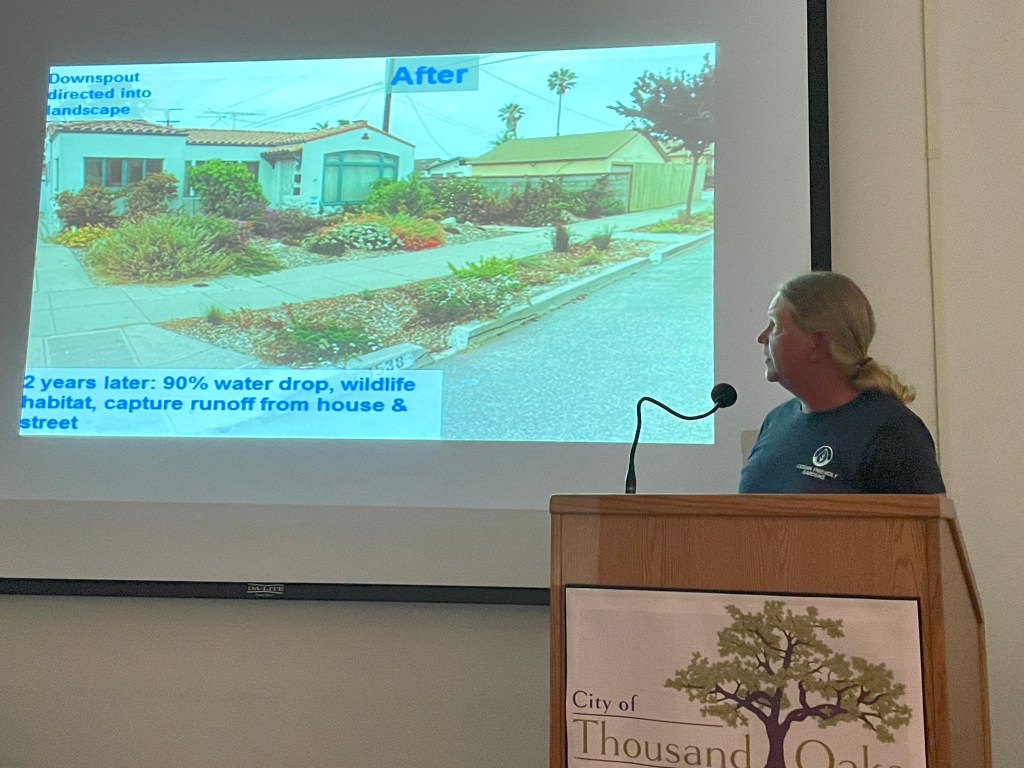
Laura Bauer from the Surfrider Foundation spoke to us at our May meeting about Ocean Friendly Gardens and keeping water in our yards. The Surfrider Foundation was started by surfers who didn’t want to surf in polluted water and are committed to the protection and enjoyment of the world’s oceans and beaches through a powerful activist network.
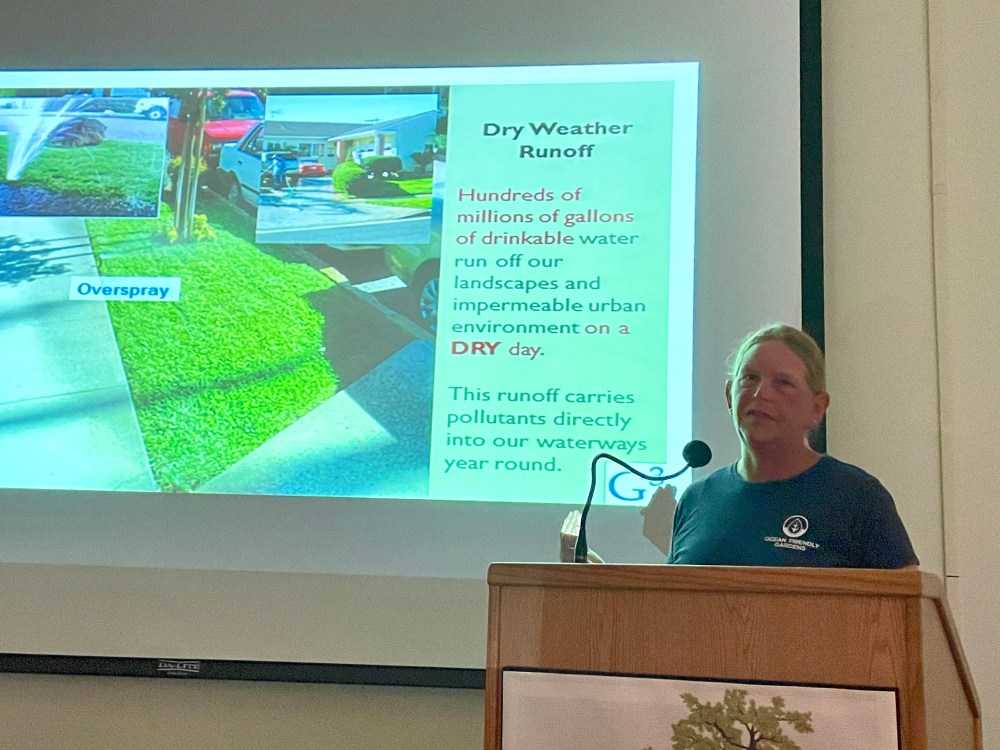
The Surfrider Foundations uses education, hands on events and policy work to spread their message. The goal is to conserve water, wildlife habitat and energy. Permeability applies to soil and hard surfaces. Retention applies to rain water. The first inch of rain in a season after a dry period, “the first flush”, holds 80% of the pollution of run off from our roofs and streets, which sends garbage and pollutants into the ocean.
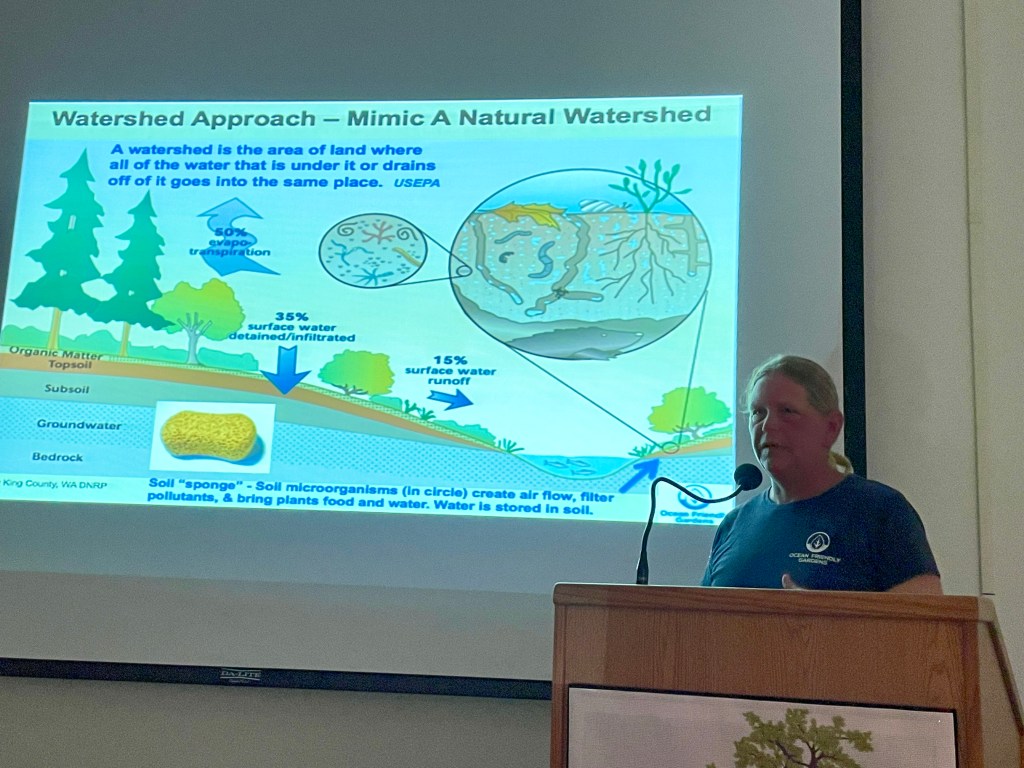
Our yards are a mini water sheds. We can create the soil in our yards to be a sponge, not a brick, with berms, swales and native plants to keep the water on our property. First step is to remove the lawn which uses more than half the water used in California, and convert it to a beautiful rain-wise, pollinator, edible, and succulent landscape. This type of landscape is low-maintenance and cost-effective.
A good way to remove the turf in preparation for new plantings and designs is sheet mulching. Install layers of cardboard, paper craft, and newspaper under several inches of mulch. Eventually it will decompose and feed the soil. You will need to water the paper quite a bit to start the decomposition process.
If you have Bermuda grass, you may have to dig it out and remove the sod or use plastic sheets over the grass for three summer months. These methods will temporarily remove the healthy microorganisms in the soil, but is better than using chemicals that are not environmentally friendly.
Soil is alive with microorganisms, including mycorrhiza, a beneficial fungus that attaches itself to the roots of most woody plants. It puts out tendrils that can go into the soil – well beyond the plants’ roots. They channel water and nutrients back to the plant and exchange sugars and create a healthy landscape.
Once the lawn is removed mix lots of compost, which is filled with billions of microscopic creatures, from bacteria and fungi to nematodes and single-celled protozoa, into your soil and keep your plants healthy. Add mulch on top to keep the moisture in the soil, break up the clay, add nutrients, and allow better water and air movement. Mulch reduces the amount of water that evaporates from your soil and reduces your need to water your plants often.
Native plants will grow in native soil quickly in the spring. After they are established, they need very little irrigation. When used with berms, swales and rain gutters on your roof, native plants help keep rainwater in the soil on your property. Swales are shallow ditches in the landscape that encourage natural irrigation. Berms are the small hills next to the swales that can be planted with native plants. Place a rain barrel under a rain gutter to collect and channel the rain water to your veggie garden. Rain tanks can be used to hold even more water as rain water is the best water for your garden.
Group your plants in areas of similar water needs and use micro irrigation that sends water directly to each plant with a water timer. Hand watering with a sprinkler nozzle might be all you need for native plants after they are established. Make sure the plants are in the right area for watering, growth, and sun exposure.
Choose permeable hardscape, walkways, patios, and edging that allows water to seep through it, to reduce runoff in your yard and help maintain healthy soils. Use materials like sand, small gravel, or decomposed granite between pavers or flagstone.
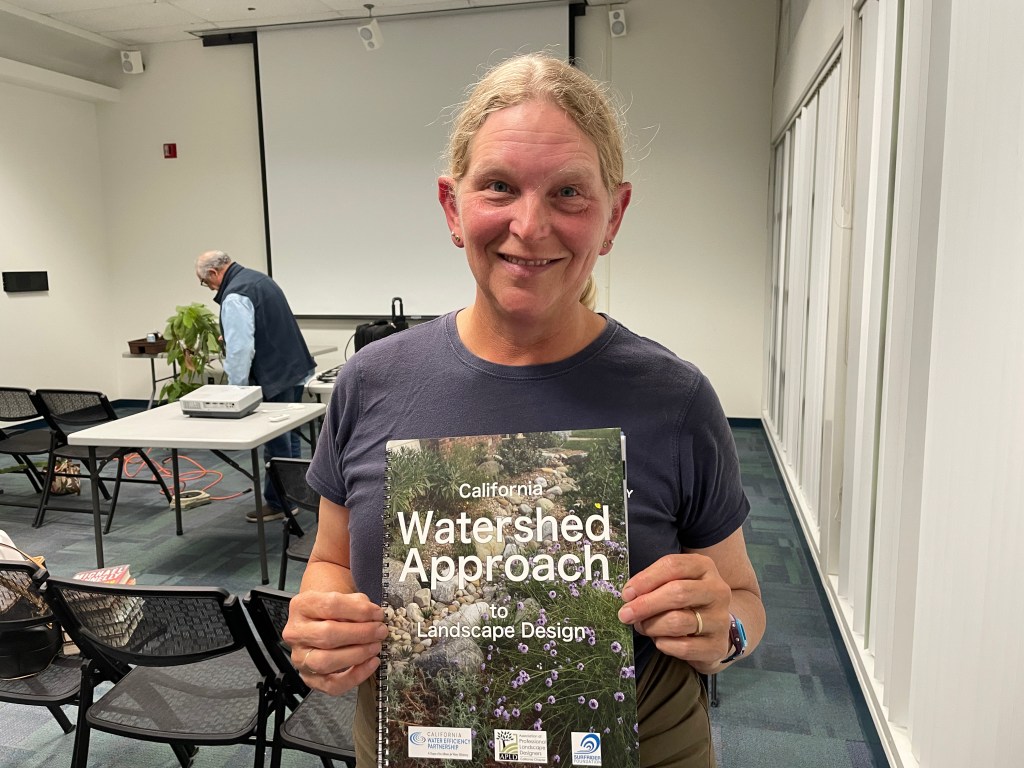
Ventura OFG (Ocean Friendly Gardens) Website is https://ventura.surfrider.org/programs/ocean-friendly-gardens. They have Guidebooks, garden making materials and links to Landscape Professionals.
 Organic Garden Club of Ventura County